WAKE UP! IT’S TIME TO PRAY

Does your morning schedule affect your prayer life? Is the time you pray important? 

Someone once said that there are two kinds of Christians: One wakes up and says, “Good morning, Lord!” The other says, “Good Lord…morning.” Should this difference affect your prayer life?

The morning difference

In the Harvard Business Review, Dr. Christoph Randler, a neuroscientist from the University of Tübingen, writes about the advantages of early rising. His research finds that early risers, “…get better grades in school” so they “attend better colleges, which then leads to better job opportunities.” He adds that, “Morning people” have “…better job performance, greater career success, and higher wages.” He also says that through discipline anyone can decide to become a “morning person.” In other words, your chronotype is not permanent.

The advantage of rising early is also recognized by corporate leaders looking for a competitive edge. The list of CEOs who get up between 4:00-5:00 a.m. reads like a Who’s Who of modern business. The list includes Apple CEO Tim Cook and Disney CEO Robert Iger, who both rise daily at 4:30 a.m. The former PepsiCo CEO and Wake Forest Business School Dean Steve Reinemundformer Avon Products CEO Andrea Jung, and former Starbucks CEO Howard Schultz are all up before 5:00 a.m. The list of high-capacity early risers is a long one.

For believers, the question is: Are our sleep schedules in any way relevant to our prayer lives? The answer is: Yes. Neuroscience and hundreds of years of practical examples demonstrate that the battle of the day may be won early in the morning.  Simply put, early morning prayer empowers you with spiritual advantages you might otherwise miss.

Good morning, Lord!u

Ultimately, morning prayer has less to do with best business practices and everything to do with what pleases God. In this regard we turn to the example of Jesus.

Mark’s Gospel mentions Jesus “…rising very early in the morning, while it was still dark, he departed and went out to a desolate place, and there he prayed.” (Mark 1:35) Most of what we need to know about the practice of morning prayer is embedded in this verse and its context. This incident from the life of Christ answers the question: Why should I rise in the earliest hours of the morning to devote myself to prayer?

Early morning prayer is solitary  

Leonard Ravenhill once wrote, “The secret of prayer is prayer in secret.” When Jesus prayed in the early morning, He “…departed and went out to a desolate place.” He left the house where many others were sleeping, and He went to a “desolate” place. The Greek word for desolate is the same word used in verses 12-13 that the ESV translates “wilderness.” In context, the “wilderness” refers to the inhospitable Judean desert. Capernaum (where Jesus was when He left the house to seek a deserted place) was a busy lake-front city with no desert. Instead, Jesus was seeking a solitude like the desert where He was certain to be alone with God. 

Early morning prayer provides that solitude in practical ways. For instance, the average American sleeps every day until 7:31 a.m. Imagine getting up at 5:30 a.m instead. Whatever time you normally rise, getting up earlier increases your chances of being absolutely alone in prayer. After all, everyone else is asleep. 

Early morning prayer is undistracted

 In 1973 a popular movie called Jesus Christ a “superstar.” That may strike us as irreverent. But, in a way, Jesus was a “superstar,” since His ministry made Him the most popular person alive. That notoriety created a unique problem related to His love of prayer. In fact, the Scripture confirms the dilemma. In Mark 1:37, just two verses after Jesus had slipped out to pray, Peter found him and shouted, “Everyone is looking for you.” Most of us can relate. At a certain point every day your time is, in a sense, not your own. Everyone from family to co-workers to antagonists wants your time and attention. 

If not from other people, we find other distractions. The most obvious example is our phone obsession. Virtually every American uses a smartphone. As a result, Americans send and receive 6 billion text messages a day – that’s 221 million per hour. If Jesus were preaching the Sermon on the Mount today, instead of advising us to pray by going “…into your room and shut the door and pray to your Father who is in secret” (Matthew 6:6), He might have urged us to “go into your room, shut the door, and turn off your phone.”

Early morning prayer is the best time to avoid phone calls, text messages, deadlines, and normal social commitments. It’s time for prayer. Instead of sleeping through your best opportunity for uninterrupted time with God, get up and pray. That’s what Jesus did.

Early morning prayer is directional  

Do you remember the question: What would Jesus do? We might find it easier to answer the question: What did He do? Mark seems to imply the answer. 

Mark is the action-oriented gospel. He doesn’t tell us what Jesus was praying about in His deserted place of prayer. Instead, Mark leaves us a clue. Notice that Jesus completely ignores Peter’s hectic appeal to join the party of those urgently looking for Him. Instead, following several hours of prayer, Jesus said, “Let us go on to the next towns, that I may preach there also, for that is why I came out” (Mark 1:38). 

In other words, it appears that Jesus was praying about what God wanted Him to do next. Sometime in those early morning hours God confirmed that Jesus was to keep moving and reaching more people with the message. 

In early morning prayer you can get the game plan for your day before the day begins. Of course, there are no bad times to pray; and Jesus prayed night and day. But if you want the most impact in prayer, wake up and pray!

JKB (This article first appeared in Baptist Press September 20, 2024 under the title “The Case for Early Morning Prayer”)

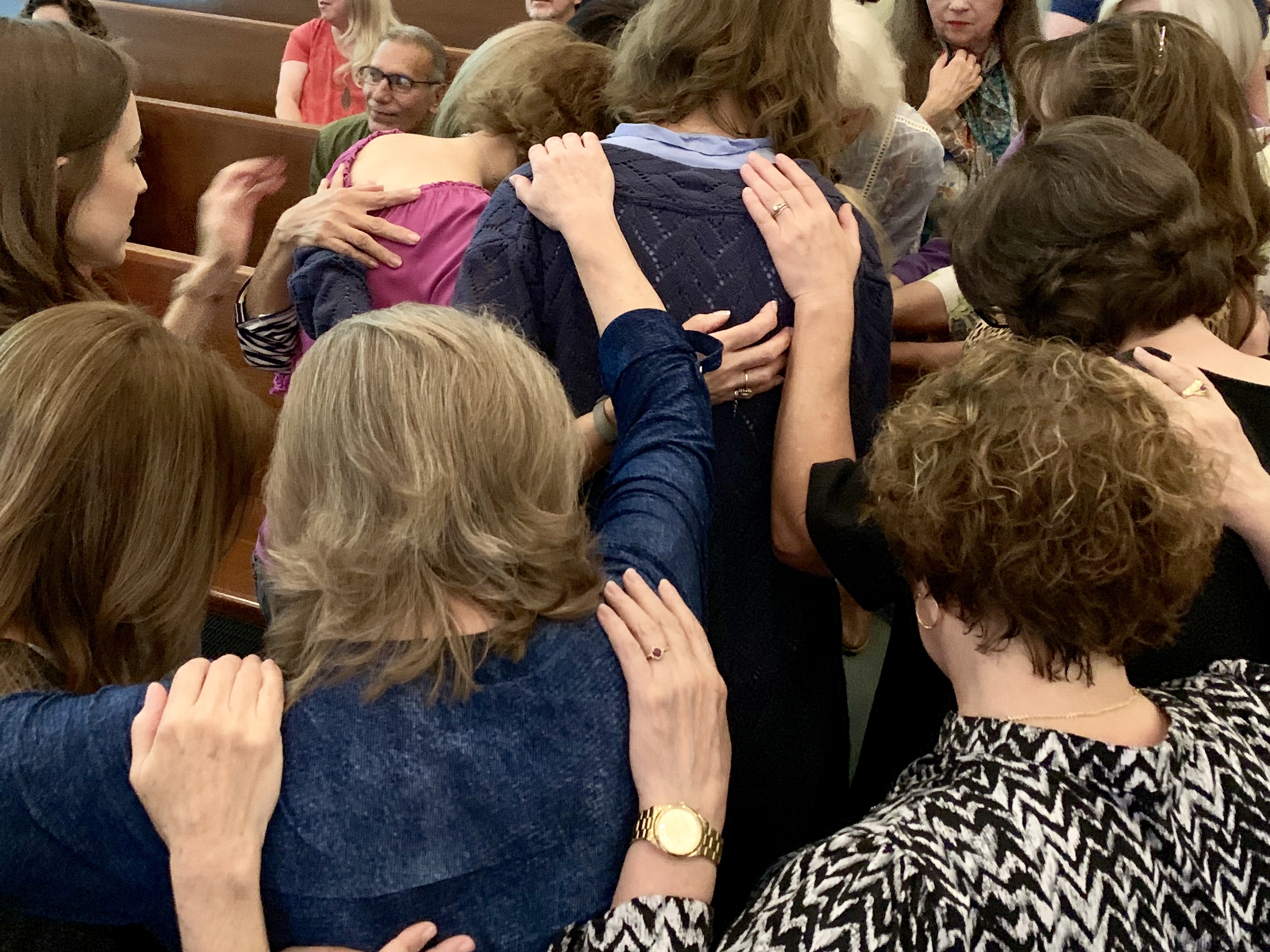
Man worship pray for god blessing to wishing have a better life. Man hands holding praying to god with the bible. christian life crisis prayer to god concept

GREAT BOOKS ON PRAYER EVERY BELIEVER SHOULD READ (PLUS MANY MORE!)

Here is 2 part list consisting of the 8 greatest books on prayer (in my humble but accuarate opinion) and a bonus list of phenomenal books on prayer every believer will benefit from (including two of mine!).

The best books on prayer inspire us to action- they lead us to pray. Choosing a list of books every believer should read is difficult simply because there are so many excellent choices. This list includes some classics from other centuries and some from the best contemporary authors and prayer leaders. All of these titles are convicting, instructive, and have motivated millions of Christians to pray. I have read them all.

WHY REVIVAL TARRIES by Leonard Ravenhill

FRESH WIND FRESH FIRE by Jim Cymbala

THE HOUR THAT CHANGES THE WORLD by Dick Eastman

POWER THROUGH PRAYER by E. M. Bounds 

WITH CHRIST IN THE SCHOOL OF PRAYER by Andrew Murray 

RED MOON RISING by Pete Greig

AND THE PLACE WAS SHAKEN by John Franklin

CELEBRATION OF DISCIPLINE by Richard J. Foster

Prayer-Life’s Limitless Reach by Jack Taylor

Absolute Surrender by Andrew Murray 

Pray Like it Matters by Steve Gaines

Dirty Glory by Pete Greig

God on Mute by Pete Greig

Breakthrough Prayer by Jim Cymbala 

The Transforming Power of Fasting and Prayer by Bill Bright 

City of Prayer by Trey Kent and Kie Bowman

Evangelistic Prayer by Kie Bowman 

A Passion for Prayer by Tom Elliff

Talk Less Pray More by Gary Miller

Mighty Prevailing Prayer by Wesley Duewel

Ablaze for God by Wesley Duewel

The Power of Prayer and Fasting by Ronnie W. Floyd

How to Pray by Ronnie W. Floyd

The Power of His Presence by Adrian Rogers 

Destined for the Throne by Paul Billheimer 

Spiritual Disciplines for the Christian Life by Donald Whitney 

Prayer Without Limits by Elaine Helms 

Prayer by Timothy Keller 

A Praying Life by Paul E. Miller 

The Battle Plan for Prayer by Stephen and Alex Kendrick

Prayer with No Intermission by Bill Elliff

The Contemporaries Meet the Classics On Prayer complied by Leonard Allen

An Humble Attempt by Jonathan Edwards

Prayer by Philip Yancey 

The Circle Maker by Mark Batterson

The Daniel Prayer by Anne Graham Lotz

It’s Time to Pray by Carter Conlon

The Path of Prayer by Samuel Chadwick

All Things Are Possible Through Prayer by Charles L. Allen

Experiencing God by Henry & Richard Blackaby and Claude V. King

When God Prays by Skip Heitzig

The Pursuit of God by A.W. Tozer 

Prayer by O. Hallesby

The Power of Extraordinary Prayer by Robert O. Bakke

The Prayer that Turns the World Upside Down by R. Albert Mohler

A Life of Prayer by Paul Cedar 

The Ultimate Conversation by Charles F. Stanley

Wrestling With God by Greg Laurie

The Joy of Answered Prayer by D. L. Moody 

Praying the Bible by Donald Whitney

Quiet Talks on Prayer by S. D. Gordon

Prayer 101 by Warren Wiersbe

I know we could add many others!

-JKB

HOW TO RAISE THE PRAYER MEETING BACK TO LIFE

“When the horse dies, dismount.” That’s the advice I got from a Texas pastor regarding ministries in the church that no longer serve a purpose. Most churches still meet on Wednesday, for instance, but have chosen to “dismount” the “dead horse” of the traditional prayer meeting and no longer offer one.

The issue is not that people don’t pray because they do. When people pray, however, 94% of them pray alone. In other words, the horse named “prayer meeting” is DOA.

Is it time to dismount? Or is it time for a resurrection? 

PRAYER MEETINGS CHANGE THE WORLD

The book of Acts is a book of prayer. Private prayer, however, is rarely mentioned.

Instead, whenever the church needed the Spirit’s power for evangelism, they gathered for a prayer meeting (Acts 1:14ff). When they faced persecution, they launched a prayer meeting (Acts 4:23-31). The early church had only one response when their pastors were imprisoned. They started a prayer meeting until their leaders were set free (Acts 12:1-5). 

Other than the gathering in the upper room before Pentecost, arguably the most significant prayer meeting ever conducted was a small, multi-day event in Antioch. There, while the group was fasting and praying, the Holy Spirit called Paul and Barnabas to reach the gentile world with the Gospel. That prayer meeting changed the world (Acts 13:1-5). It’s clear that prayer meetings were the preferred choice of the powerful early church, so why are prayer meetings nearly extinct in the powerless church culture that has survived?

Prayer meetings change the world, but maybe not the way we typically conduct them. Is there a better way? Yes. Here are three ways to resurrect the dead prayer meeting: 

1. PASTORS TAKE THE LEAD

Pastors report spending, on average, between 10-18 hours preparing just one of their weekly sermons. But when it comes to a church prayer meeting, how much time do we devote to preparing? Isn’t a powerful prayer meeting important too? We may argue that prayer should be spontaneous and unplanned so that it might be genuinely led by the Spirit. That’s a good argument until we notice how our lack of planning has left us with dead church prayer meetings.

In the city-wide prayer meetings I help lead, as well as in the local congregation, we begin with a theme. Then, we add relevant Scripture that reinforces that theme. We want our prayer meetings to be Spirit led and Scripture fed. We urge those leading not to “preach” but to pray. Planning is not about writing a script or being unnecessarily controlling but instead about building a platform to welcome the presence of God. 

In a local church’s prayer meeting, the pastor must take the lead and provide prayerful leadership to this desperately needed ministry. As Leonard Ravenhill warned us, “The pastor who isn’t praying is playing.”

2. STRIKE UP THE BAND

When King David moved the ark to Jerusalem and envisioned a permanent temple, one of his first actions was the selection of hundreds of musicians and singers to fuel the unceasing worship in the house of prayer (1 Chronicles 25:6-7). Since the worship was to be nonstop, the need for musicians rotating in shifts climbed into the thousands (1 Chronicles 23:5). 

When we review the status of our prayers kept in heaven, we find them held in “golden bowls” (Revelation 5:8). The creatures holding the bowls of prayer are all carrying harps, too, thus uniting prayer and the music of praise.

Paul also knew that music could be a form of prayer—especially when we’re not just singing about God but worshipfully singing to God! Paul said that one of the pieces of evidence of a Spirit-filled life is a heart full of singing: “Addressing one another in psalms and hymns and spiritual songs, singing and making melody to the Lord with your heart” (Ephesians 5:19). Notice that worship and prayerful singing is “to the Lord.” It’s a praise gift to God while we pray. 

Prayer sings. The biblical history of music combined with prayer is a powerful pattern for today. In your prayer meetings, find a way to incorporate worship music and congregational singing. Something powerful occurs when singing praise becomes a form of prayer. The psalmist recognized it 3000 years ago when he wrote,

“Yet you are holy, enthroned on the praises of Israel” (Psalm 22:3). 

3. LOSE THE LIST, OPEN THE MIC

We love lists. Most church “prayer meetings” I’ve ever been part of have been dependent upon someone writing down prayer requests and finally voicing a prayer when the list was complete. Unfortunately, compiling the list can take 10 minutes, and the prayer can last two minutes. Prayer meetings without prayer are like the fig tree in the gospels—all fig leaves but no figs! We don’t see list-based prayer meetings in the New Testament, and our lifeless facsimiles of real New Testament prayer meetings signal the need for a paradigm shift. 

As a pastor, I moved our people away from lists over time. They still happened occasionally, but not in the prayer meetings I led. 

One night, at one of our church-wide prayer meetings, rather than build a list, I challenged people to share with the congregation whatever they wanted prayer for if it directly related to their lives. It was astounding how transparent and vulnerable people became in that setting. In every conceivable family, the financial, physical, spiritual, and emotional struggle was shared. This approach became the norm for our prayer meetings. People began sharing gut-wrenching stories and personal pain most of us could relate to but didn’t expect to hear. I then called anyone who had ever found victory in that area to come to pray for the person standing beside me in front of the church. It was electrifying. That one gesture—opening the mic for people to personally share their needs—changed our prayer meetings. The prayer meeting came to life. 

We want everyone to be prayed over, so keeping a prayer list for ongoing needs in the church family still makes sense. But if you want to fire on your prayer meeting, open the mic for personal prayer requests and watch for spontaneous combustion. 

None of this happens overnight. It requires planning, persistence, and patience. But if your church brings your prayer meeting back to life, your prayer meeting will bring your church back to life. 

-Kie Bowman

(This article originally appeared in Baptist Press)

SIX WAYS PASTORS BECOME MEN OF PRAYER

Is every pastor a man of prayer? At first, the question sounds odd, like asking if all water is wet or if all fire is hot. The truth, however, may be surprising. Statistically speaking, almost no pastor is satisfied with his prayer life.

During a recent pastors’ conference where I led the prayer response, pastors openly repented of having “no prayer life.” One pastor called me after the conference to confess that he “never prays.” It was surely an exaggeration, but I wonder how many other pastors feel a sense of failure in prayer? Fortunately, beyond anecdotal information alone, we have supporting data. In 2022, Lifeway reported that 72% of pastors believe consistency in their personal prayer lives is their number one spiritual need.

Scripture offers us plenty of incentive to be praying leaders. Jesus, for instance, governed His ministry through prayer. There are about 20 instances in the Gospels during significant points in His ministry when Jesus prayed. If He organized His ministry around prayer, shouldn’t we? 

Having learned from the Master, Peter, and the other Apostles identified prayer as one of their top two priorities in ministry (Acts 6:4). Paul told the Colossians that he never ceased to pray for them (Col.1:9) and that he “wrestled” in prayer on their behalf (Col.4:12). He told the Romans (1:8-10), Corinthians (1 Cor. 1:4), Ephesians (1:16), Philippians (1:3-4), and Thessalonians (1 Th. 1:3-4) something similar. He counseled his younger protege Timothy to shepherd his church around prayer (1 Tim. 2:1-8). 

In the New Testament, church leaders prayed (Acts 1:14; 13:1-4). Why wouldn’t we follow their example? We certainly haven’t improved upon their results!

Prayer is central to New Testament ministry, so what immediate steps can any pastor take to become a man of prayer? 

  • Put God on Your Calendar. First, prioritize prayer like any other important appointment. And remember, if you’re too busy for prayer, you’re too busy. Setting a specific time for prayer each day is critical. Pastors live by calendars, appointments, and deadlines. Meeting with God at the same time every day builds consistency. 
  • Set a Time. Time spent in prayer matters. Even if you start with only 5 minutes a day, it may be an improvement over your current practice. Spiritual growth can’t be microwaved; it has to be marinated. Real prayer requires quality time.
  • Name the Place. Next, determine your place for prayer. You have a room for almost everything else of importance in your life. Why would a pastor not have a prayer place? Jesus said, “when you pray, go into your room and shut the door and pray to your Father who is in secret” (Mt 6:6). Plainly, a place with limited distractions is essential to praying “in secret.” Wherever your place is, it should be distraction free and always available. 
  • Habit Forming. Keep your commitment. Let’s say, for example, you commit to praying 15 minutes every morning. That’s a good start, but it’s not enough. Instead, for example, commit to praying 15 minutes every morning for 30 days. Remember, “you are what you repeatedly do.” Prayer, like every other priority in your ministry, must become a habit in order to become successful. You’re not just praying. You’re building a habit of prayer. 
  • Fuel the Fire. Every pastor knows that being a “self-starter” is essential for ministry. Maintaining your motivation is an essential key that defines the difference between finishing well or not. No one maintains his motivation levels without frequently fueling the fire. For instance, every pastor needs to read current and classic books on prayer. Read biographies of great prayer warriors. Listen to other leaders teach on prayer. Success means taking advantage of easily accessible wisdom available to fuel your fire. 
  • Team Up. Prayer dominates the book of Acts, yet it is almost impossible to find anyone praying alone. There are only a couple of examples. Instead, it appears that everything in the book of Acts happened at a prayer meeting, after a prayer meeting, or on the way to a prayer meeting. For too long in the modern age, we have made prayer only a DIY project. Of course, secret prayer is necessary, but so are dynamic prayer meetings. Frequently what we call a “prayer meeting” is, in fact, dull and lifeless and bears no resemblance to the prayer meetings in the New Testament where the earth shook when they prayed, prison cells were opened, and the Spirit spoke. Pastors must reclaim the prayer meeting as a vital force for ministry in the 21st century.

Our congregations are hungry for the awareness of God’s presence. The 2023 Asbury revival is a perfect example. Thousands of people traveled to tiny Wilmore, Kentucky, to experience the presence of God in a prayer meeting.

The pastor’s prayer life is not an additional item on his busy “to-do” list. Instead, the praying life is a complete reorientation of how we do ministry. We’ve tried it other ways. Prayer is the better way.

This article originally appeared under the same title in BaptistPress.com

WHAT WE PRAY ABOUT (part 2) 

(Matthew 6:9-13)

You want to pray and you want to pray effectively. So, what will you pray about? 

Jesus needed only about 50 words (52 in the English Standard Version) to revolutionize prayer. He gave His disciples a roadmap for personal prayer which we traditionally call “The Lord‘s Prayer”. It’s worth noting that no one in the New Testament ever prayed or repeated the prayer. Even Jesus, in the approximately 20 occasions where His prayers are recorded, never repeated the prayer.  Instead of saying, “Pray this prayer” Jesus said, “Pray like this” (Matthew 6:9).

The Lord’s Prayer, or as some call it, “The Disciple’s Prayer,” therefore, provides a pathway or map for personal prayer. It functions as a prayer guide. Due to the depth and richness of it’s content, there are numerous ways the prayer has been outlined. My friend, fellow Austin pastor, and co-author of our book on prayer, Trey Kent, for instance, has developed a prayer guide based on the Lord’s Prayer with 12 segments. I have seen many other excellent outlines of the prayer as well. No matter how it may be outlined, I agree with Michael Green, the British New Testament scholar, who said,  “The marvellous prayer has depths we shall never plumb.” For the purposes of this devotion, we will analyze the prayer using 6 broad categories. These “categories” of prayer can guide your daily devotion today or for years to come. The Lord’s Prayer, in other words, helps you know what to pray about!

PRAISE

You can begin your daily prayer by praising God.  Jesus started there when He said, 

    “Our Father in heaven,

    hallowed be your name

Starting with praise keeps our prayer “God centered” instead of “me centered.” If I say to my wife, “You look beautiful” I am praising her. If I say to my daughters or my son, “Your work is excellent” I would be praising them. If I say to God, “You are holy, worthy, mighty, merciful, loving”, etc, I am praising Him. 

Praise is a way to express love and our devotion to the Lord in the most personal and intimate ways. For some reason, when we pray like that, it opens up our prayer to greater possibilities, and our faith in God rises. Praise changes the entire dynamic and mood of prayer into a hopeful and faith driven exercise. A friend of mine once said it like this, “It’s amazing what praising can do!” 

GREAT COMMISSION

The world we live in is fallen and broken. We want to pray- and the times demand an urgency in prayer- for renewal, revival, and the influence of God to move freely in our churches and in our culture. Jesus taught us to pray, 

    “Your kingdom come,

    your will be done,

        on earth as it is in heaven.”

We can pray for God’s will and justice to prevail in our nation, for souls to be saved, for the church to be revived, for spiritual awakening in America, and anything else that will advance the Kingdom of God on earth. I always pray for people by name I know who need to be saved. I pray  my church and I myself will experience renewal and revival. I pray for the fulfillment of the Great Commission and everything involved with it. Our godless times, the level of spiritual warfare, and the increasing  Satanic attacks around the world demand that Christians know how to pray for the Kingdom of God to come! 

PETITION 

It’s God’s will that we spend time  praying for our own needs. Jesus expects it and encourages it. He taught us to pray,

    “Give us this day our daily bread”

You know what you need to pray about for your own life. Your finances, your health, your job, grades at school, and everything else that touches your life personally is a potential prayer request! The instruction of Jesus was that we would seek our “daily bread” which is a not too subtle reminder that we need to pray for God to meet our needs everyday! Prayer is a daily commitment. 

CONFESSION 

All of us need to bring our repentance “up to date” on a daily basis. Nothing can disrupt our relationship with God faster than unconfessed sin. Jesus taught us to pray,

    “and forgive us our debts

Be honest with God and yourself about your sin and personal struggles. God wants to forgive you and change you from the inside out. Don’t let sin keep you from prayer- let prayer keep you from sin. 

INTERCESSION

In the Lord’s Prayer there is only a single reference to other people. Jesus said, 

as we also have forgiven our debtors.”

Even though the reference to others relates to those who have treated us unfairly-someone in our debt or who needs our forgiveness- it is still a reminder that no prayer is complete which does not include other people and their needs. For instance, every morning I pray for each member of my family by name. I know what is happening in their lives and I want God’s best for them. Praying for them is a important part of my daily time with God. Then, I usually have many others on my mind who have asked for prayer too. Praying for other people is one of the most selfless and most powerful forms of prayer. We should all seek to excel in the ministry of intercession. 

HOLINESS

I once heard Pastor Chuck Smith say, “There’s only one thing worse than not growing in Christ, and that’s going backwards!” I want to keep growing in Christ and I’ve learned at least two things about spiritual growth. First, I never grow by accident. Second, I will face opposition. Jesus challenges us to pray about our own spiritual well being when He says, 

    “And lead us not into temptation,

        but deliver us from evil.”

Every morning I ask the Lord to give me a holy life. Our personal growth in Christ-likeness depends upon the active help of God and our willingness to resist temptation. Pray, therefore, for your own growth, holiness, and victory over temptation. You will constantly face an organized, demonized, and weaponized enemy who wants to “steal, kill, and destroy.” In prayer, we can “beat the devil before we meet the devil.” 

WHAT’S POSSIBLE

Imagine how your life could change if you started spending time in prayer every day with an organized, deliberate plan. Commit to the time you’ll need. Have a Bible (on your phone or in traditional book form) near. Decide to follow a plan such as the one we’ve reviewed today. Make notes for yourself while you’re praying. Add other areas to your prayer list. God wants to meet with you today!

-J. Kie Bowman, Austin,Texas

WHAT TO PRAY ABOUT! (part 1)

-Kie Bowman

Do believers find it hard to pray? A recent national survey confirms what we all suspected. For example, the survey found that less than a third of evangelicals admit to having any meaningful time devoted to daily prayer. Nearly one fifth of us only pray when it’s convenient. Obviously, we could do better. 

When I started walking with God as a teenager, I wanted to pray but I didn’t yet know how or what to pray. Fortunately, I was introduced to some “entry level” prayer plans which helped me begin my life of prayer. For instance, the ACTS prayer plan has been popular because it’s easy to learn and practice. You spend a few minutes in Adoration (praising God for who He is), time in Confession(repenting of your own sins), some time in Thanksgiving (thanking God for all He has already done for you), and finally time in Supplication (these are your prayers of request – asking God to supply your needs). 

Another simple (and very similar) plan I used a lot when I was learning to pray begins with a commitment of only 5 minutes.  I still encourage the “5 Minute Prayer Plan” for anyone who is just getting started. 

Minute One: Confess your sins

Minute Two: Thank God for all He has done for you

Minute Three: Pray for others

Minute Four: Pray for your requests

Minute Five: This is a “bonus minute” which allows you to pray more for one of the first 4 “categories,” or anything else you want to talk to God about. You’ll need the extra minute! 

You may say these plans are “too simple” or “too brief” for significant prayer. Of course, in one sense, you’re correct. Remember, however, these are “entry level” plans. When I started developing my prayer life years ago, for instance, my prayers were inconsistent, scattered, and undisciplined. I’ve heard many people testify that when they pray their minds wander. These plans provide simple structure. In addition, when developing the habit of prayer most people are inconsistent at first, finding it hard to meet with God on a regular basis during the week. Eventually, in the absence of a plan, inconsistency becomes the norm and too many believers continue to struggle in prayer. Our enemy would like nothing better than to face an undisciplined, prayer-less Christian. And yes, these plans encourage only a few moments of daily prayer which surely isn’t enough. That’s also mostly a correct analysis, but before you can swim laps you’ve got to get in the water! 

These plans offer good places to start a habit of prayer, or to start over. Honestly, when I started as a teenager with the five minute plan I found that my daily time with God increased quickly. Most everyone will have the same experience. 

 BEYOND BEGINNING

What about a strategy for those ready to move beyond a basic, or entry level prayer plan?  In part 2, we will look at how to use the most famous prayer in history as a guideline for your own prayer life. For now, praise, supplication, intercession, and confession can and should be on everyone’s prayer list. The only thing left to do is to do it!

CHANGE YOUR WORLD AT PRAYER MEETINGS! 


CHANGE YOUR WORLD AT PRAYER MEETINGS! 
-by Kie Bowman

A friend of mine, who leads a large ministry in Austin, once said to me, “Everything in the book of Acts happened at a prayer meeting, after a prayer meeting, or on the way to a prayer meeting!” After studying the book of Acts, I have to admit his statement is essentially correct. I’ve come to believe, along with the 20th century prayer leader, Armin Gesswein, “The early church didn’t attend a prayer meeting – the early church was a prayer meeting!” There was something dynamic and miraculous about the prayer meetings in scripture and we must recapture what we’ve lost since then because prayer meetings change the world.

THINK DIFFERENT/PRAY BETTER

Admittedly all of us have been to some boring, ineffective “prayer meetings” that were more “meeting” than prayer. Forget those! They are criminal ripoffs – man made counterfeits of what we find in Scripture. God is calling us to think differently- and more biblically- about prayer meetings. We must abandon the lifeless so called “prayer meetings” we remember, and immediately move back to a biblical, life giving model for prayer meetings that change the world! Dead “prayer meetings” offend God and nobody wants to attend them anyway. They are indefensible so move on and let’s do it better! The Bible informs us about the importance of dynamic prayer meetings.

DAVID’S HOUSE OF PRAYER

One biblical model for a dynamic prayer meeting is found in David’s Tabernacle.  David included worship music with prayer and we should too!

When King David organized the responsibilities of the priests and Levites in the House of God he set aside singers to lead night and day worship. 

Now these, the singers, the heads of fathers’ houses of the Levites, were in the chambers of the temple free from other service, for they were on duty day and night.”

(1 Chronicles 9:33)

The same is true of musical instruments- David made certain the prayer meetings were filled with worship music.  He insisted multiple instruments- specifically designed for prayer meetings- be played consistently. From a total of 24,000 Levites charged with ministering in the house of God, David assigned 4000 of them to provide non-stop worship music to support the night and day prayer meeting. In other words, David assembled praise teams and bands to facilitate night and day prayer. 

4,000 gatekeepers, and 4,000 shall offer praises to the LORD with the instruments that I have made for praise.”

(1 Chronicles 23:5)

It’s obvious that worship music and singing is one form or expression of prayer. Our dynamic prayer meetings should be infused with prayer music using instruments and worshipful singing and praise. Worship and singing pumps life into a prayer meeting- it helps us keep our focus on the joy of the Lord and that stirs our faith.

PRAYING LIKE PENTECOST 

(Acts 1:14) 

Someone has observed that, “Jesus started the church the way He wanted it, now He wants the church the way He started it.” The book of Acts is our blueprint for the life of the New Testament church. At Pentecost in Acts 2 the church was born when the Spirit was poured out after a dynamic 10 day prayer meeting. Big things happen in response to prayer. Fortunately, God has provided a template for prayer for the New Testament church today based on the model originated and practiced in the book of Acts. Simply put, the “Acts model” for prayer was the prayer meeting. From the first few paragraphs of the book we find the entire congregation – the Apostles and many others-in a prayer meeting.

All these with one accord were devoting themselves to prayer, together with the women and Mary the mother of Jesus, and his brothers.”

(Acts 1:14)

This habit of meeting together for prayer continues throughout the entire book. In fact, the Apostles announced early on that leading prayer would be one of only two ministries they would focus their lives on-along with the all important ministry of the Word. 

But we will devote ourselves to prayer and to the ministry of the word.

(Acts 6:4)

It might be tempting, but it would be shortsighted, to imagine that the Apostles meant they would spend all their time in private prayer. They no doubt spent hours in private prayer- just as Jesus taught them-but that is not the larger message of Acts 6:4. The phrase, “devote ourselves to prayer” in English ignores the definite article, “the,” found in the original Greek New Testament. The Apostles said, “We will devote ourselves to the prayer…” When they said “the” prayer, they were referring to an event- they meant the church’s consistent habit of gathering in the prayer meetings. 

Prayer in the early church was a definite, public practice. Prior to the Apostles stating  their intention to devote themselves to prayer, several instances of prayer had already occurred in the book of Acts and not one of those instances was an example of private devotionals. Only prayer meetings had been mentioned up to that point in the book of Acts. There isn’t a single reference to private prayer so far. New Testament scholars like John R. W. Stott acknowledge, “It is noteworthy that now the Twelve have added prayer to preaching (probably meaning public as well as private intercession).” The Apostles were men of private prayer, of course, but the public leadership of their ministries demanded that they continue leading the dynamic prayer meetings which kept the fires of revival burning hot in the early church. 

We would never interpret the Apostolic focus on “the ministry of the Word” as an expression of their commitment to private Bible reading. Neither should we interpret their ministry of prayer as an expression of their own private devotional exercises. In fact, for the next several chapters of Acts, prayer will be mentioned in every chapter and on nearly every page- but in only a single example do we find one the original 12 Apostles praying alone! The book of Acts is about the power of prayer meetings that changed the world! 

SHARPENING IRON

How does this focus on dynamic, life giving, biblical prayer meetings affect your prayer life? For one thing, you should be a part of a prayer meeting like this. The early church exploded in miracles, missions, and ministry as a direct result of the powerhouse that was the prayer meeting. Something tells me the people who experienced a prayer meeting in the book of Acts never wanted to miss the next one! 

Why should you attend a prayer meeting like that? How does it benefit your prayer life to be involved in a congregation of praying people? There may be numerous advantages but allow me suggest two powerful reasons your prayer life will benefit from attending dynamic prayer meetings. 

First, we grow best in the context of community. The Bible says,

“Iron sharpens iron,

        and one man sharpens another.”(Proverbs 27:17). 

Our forefathers of faith, in the Iron Age of Israel’s history, knew their iron weapons could only reach maximum effectiveness if they were sharpened by other iron. The writer of Proverbs brilliantly recognized the comparison immediately that people- like iron weapons needing to be sharpened- improve fastest and best in the context of interaction with other people. That’s one reason we need to attend powerful prayer meetings. Yes, Jesus calls us to secret places for prayer, but He also calls us to grow and thrive in praying groups. 

Not only do we benefit as a direct result of praying with other people, dynamic prayer meetings carry the unique promise of God’s presence. If you want answered prayer on a big scale, prayer meetings are essential. Jesus said,

“Again I say to you, if two of you agree on earth about anything they ask, it will be done for them by my Father in heaven. For where two or three are gathered in my name, there am I among them.

(Matthew 18:19-20)

Few other promises of Jesus more clearly anticipate the history changing power of the church gathered in faith-filled prayer meetings! When we gather in expectant faith with other like minded believers, ready to pray and cry out to God, we can expect Jesus to meet with us! Amazing things happen at prayer meetings. 

4 POWERFUL KEYS FOR DEVELOPING A LIFE OF PRAYER!

4 POWERFUL KEYS FOR DEVELOPING A LIFE OF PRAYER
Prayer Moves the Hand that Moves the World

At our Church we always say, “Prayer moves the hand that moves the world!” Most Christians want to be more effective in prayer so here are 4 simple but strategic principles to help you develop a more consistent, satisfying, and powerful prayer life. 

COMMIT 

(Luke 11:1)

Even though prayer is powerful and all of us want a better prayer life, it is still a discipline you can learn and you can get better if you make a commitment. We never grow spiritually by accident-it calls for commitment. We grow when we commit to grow. Remember, the original disciples said, “Lord, teach us to pray.” They knew commitment was involved and they knew they could get better at prayer. What commitments do you need to make in order to get better in your prayer life? 

A PLACE 

(Matthew 6:6)

Jesus taught us about the importance of a designated place for prayer when He said, “when you pray, go into your room and shut the door.” Your “room,” or place of prayer, could be almost anywhere if you can control the schedule and eliminate distractions. That means privacy and and a place for unhurried concentration are essential ingredients for developing your life of prayer. Turn away from your text messages and social media to focus on the Lord. Give quality time to the Lord each day. Your prayer life will grow. 

PRIVACY

(Matthew 6:6)

Jesus also encourages privacy in prayer, because He said that once you’re in your place of prayer you should “pray to your Father who is in secret. And your Father who sees in secret will reward you.” That means finding a place and time you can be alone each day for your regular meeting with God. Remember, “the secret of prayer is prayer in secret.” We don’t pray in secret because we’re ashamed of prayer, we pray in secret (or solitude) because we want to prioritize prayer above all the  noises and distractions that so dominate 21st century life. You will never regret time alone with God! 

THE BIBLE AND PRAYER

(John 15:7)

Jesus made us an incredible promise when He said, 

If you abide in me, and my words abide in you, ask whatever you wish, and it will be done for you.” The words of Jesus- His teachings- are found in Scripture. Jesus taught that daily Bible reading and prayer go together. If we read and study the Bible we should follow it up immediately with sincere prayer. I do this early every morning. It’s the best part of my day. I have my quiet place, and it’s early enough that no one needs anything from me at that time. So I read the Bible and pray to begin each day. Remember to saturate your mind with the Word of God as part of your daily commitment to prayer. It’s a game changer.

MORE

Of course there are many more principles to incorporate into your journey of prayer improvement. We will deal in other devotionals with the power of prayer meetings, developing  your prayer lists, how much time to spend in prayer, what to pray, and more. 

For now, begin the journey. Plan ahead because you’ll need to schedule the daily time, gather any resources you may need, and find your private place. You will improve if you keep going. The prayer journey of a thousand miles begins with a single step. Take the step!

Dr. J. Kie Bowman

GOD’S CALL TO FASTING

GOD’S CALL TO FASTING
(A Practical Guide)


“I humbled myself with fasting…” (Psalm 69:10)

“Yet even now,” declares the LORD, “return to me with all your heart, with fasting….” (Joel 2:12)

“Then I turned my face to the Lord God, seeking him by prayer and pleas for mercy with fasting….” (Daniel 9:3)

J. Kie Bowman

Prayer and fasting are significant spiritual disciplines any believer can utilize in order to yield our lives more fully to God. In Scripture, prayer is mentioned hundreds of times with no reference to fasting, but the opposite cannot be said. Fasting, in Scripture, is almost never discussed apart from prayer. They go together because fasting belongs with prayer and is, in one sense, an extension of prayer. In fasting we let go of our plans; in prayer we take hold of God’s plans. Prayer connects us to Heaven while fasting disconnects us from earth!

WHY FASTING?

Here are a few simple but powerful reasons why every follower of Christ should incorporate fasting into their plans for spiritual growth.

  • Fasting creates a deep passion for intense prayer
  • Fasting increases our sensitivity to the Holy Spirit
  • Fasting strengthens our resolve to obey God
  • Fasting heightens our desire for His presence
  • Fasting purifies our motives
  • Fasting reminds us to pray without ceasing
  • Fasting humbles us so our focus is on the Lord.

In addition to these thoughts, one of the most convincing incentives for fasting is the gallery of spiritual giants found in Scripture who fasted. We quickly think of Moses, Elijah, Daniel, and many others, but our primary example is Jesus. Jesus was obviously a man of prayer but He also was intensely committed to fasting. Not only did He practice it Himself, Jesus taught on fasting and expects His followers to fast.

WHAT IS FASTING?

The word, or some form of the word, fasting occurs more than seventy-five times in Scripture. Fasting was common in both Old and New Testament practice. Moses, Elijah, Nehemiah, Ezra, Daniel, John the Baptist, Paul, and Jesus all fasted. So did many others.

Fasting in scripture is always about denying ourselves food. For some today, fasting has become a metaphor for giving up almost anything for godly reasons. For purposes of developing self-discipline, there may be value in refraining from some practices for a time. The people of the Bible, however, would have never considered merely give up some pleasurable practice.

Consider, for instance, the Hebrew and Greek words we translate into English as “fasting.” The Greek word literally means “no eat.” The Hebrew is even blunter, where the word literally means “shut mouth!” When we discuss fasting, therefore, we mean refraining from food.

BIBLICAL FASTING FOR SPIRITUAL GROWTH

Jesus encouraged us to fast when He said: “And when you fast, do not look gloomy like the hypocrites, for they disfigure their faces that their fasting may be seen by others. Truly, I say to you, they have received their reward. But when you fast, anoint your head and wash your face, that your fasting may not be seen by others but by your Father who is in secret. And your Father who sees in secret will reward you.” (Matt. 6:16-18 ESV)

Notice that twice Jesus said “when” you fast, not “if” you fast. For many centuries devout and sincere followers have fasted for spiritual power and to increase the effectiveness of their prayers. Fasting is an important spiritual discipline for our own generation. Some of the practical points Jesus mentioned are:

  1. Fasting is expected by the Lord (“…when you fast”)
  2. Fasting is for the Lord’s notice not for the approval of others (“…may not be seen by others but by your Father”)
  3. God will bless you when you fast (“…your Father…will reward you”).

IS FASTING FOR TODAY

One day, some followers of John the Baptist came to Jesus with a challenge about fasting. They wondered why the disciples of Jesus were not fasting. It’s an interesting exchange.

“Then the disciples of John came to him, saying, “Why do we and the Pharisees fast, but your disciples do not fast?” And Jesus said to them, “Can the wedding guests mourn as long as the bridegroom is with them? The days will come when the bridegroom is taken away from them, and then they will fast.” (Matthew 9:14-15 ESV)

Jesus told them His disciples didn’t need to fast while He was with them but after He would be taken away, “then they will fast” (v15). The time for fasting is now- while Jesus is away in Heaven, awaiting His return.

PRACTICAL WAYS TO FAST

There are three fasts I recommend for almost anyone. If you have specific health conditions which affect your diet, check with your healthcare provider about the medical aspects of fasting. Some people, it’s true, will face extra challenges with fasts. For most people in reasonable health, one of these simple but powerful fasts, with thoughtful preparation, can be undertaken to increase your sensitivity to God’s Spirit.

THE PARTIAL FAST

In Daniel 10:2-3, the prophet, who was no stranger to fasting, described a “partial fast” in which he denied himself “choice food,” including meat. During a partial fast, you might want to limit your food to only fresh fruits or vegetables in the smallest amounts without sugar, salt, or seasonings. You would not want to drink any beverages other than water or limited amounts of 100% fruit/vegetable juices (avoid concentrates which are loaded with added sugar). For coffee or tea drinkers, it is appropriate to have a cup or glass without sugar or cream.

This might be the perfect fast for those who need to eat a small amount in order to take medication but still want to fast. As always, a fast is self-denial. So the menu isn’t the only important thing but also the small portions that matter. Use common sense, limit your intake of food, talk to your doctor, and trust God.

The spiritual benefits will include a heightened sense of the presence and joy of the Lord, if you spend quality time in Bible study and prayer. It is an excellent way for those fasting for the first time to begin this exciting, refreshing, and rewarding spiritual discipline.

THE ONE DAY NORMAL FAST

I have discovered the wonderful results of a regular one-day fast in which I only drink water and a little black coffee during a twenty-four hour period. I like to fast on a given day until breakfast the next day. The rewards are tremendous! The Bible always comes alive during these days in a special way, and our prayer life during the one-day fast can be as powerful as we might ever experience.

A variation of the one-day fast covers the twenty-four hours from sundown to sundown. You eat nothing from a late-day meal on one day until the same time the next day.

As with the other fasts mentioned, common sense must be used by those with preexisting medical conditions which require special diets. This guide is not intended as a substitute for medical advice. Most adults and older teenagers, however, should be able to do a one-day water fast if He leads them to the fast and they seek God during the day.

THE EXTENDED FAST

For those more experienced with fasting, a three-day or long fast with only 100% fruit/vegetable juices, water, or, for the coffee/tea drinkers, a small amount of unsweetened black coffee, or tea is a great exercise in commitment and sacrifice.

During this fast, no solid foods, including fruits/milk products or soft drinks, are consumed. This is a more difficult fast since the body really begins to “cry” to be fed during the length of the fast. The spiritual benefits, however, outweigh the inconvenience and can be life-changing. Expect to hear from God during the extended juice fast. I do not recommend more than three days until you have checked with your doctor, spiritual leaders, and/or Christian family/friend. I did a 40 day fast several years ago and I’ve done a few 10 day fasts, and multiple 3 day fasts. I recently did a 21 day fast. I’ve never had any ill side effects. I highly recommend the extended fast.

Whenever you fast, remember to spend at least as much time in prayer and Bible study as you would have spent eating and preparing to eat. This isn’t a diet. Fasting is about seeking God for breakthrough in your spiritual life, so read the Word daily and pray and worship as much as possible each day. A lot of prayer and Bible reading are essential elements of a successful season of fasting.

PRACTICAL POINTS TO CONSIDER CONCERNING A FAST

• If you suffer from chronic health concerns (such as diabetes or other ailments) which demand a specific diet or regular medications requiring food, a complete fast of food might not be advisable without consultation from your doctor and careful planning.
• With any fast, drink plenty of water.
• On a long fast, consider supplementing water with a 100% fruit juice for an energy boost (do this in moderation as the sugar spike in fruit juice is not always as healthy as we might think!)
• Spend the time in prayer and Bible study that you would have normally spent in eating, preparing meals, cleaning up, or traveling to meals.
• Most physical activity is acceptable during a one-day fast, but avoid overexertion. If you feel dizzy or light-headed, rest and drink water or a small amount of fruit juice. Pace all activities. All of this depends upon how much control you have over your own schedule. It is important to carefully plan your fast, even a brief one.
• Exercise common sense. Talk to spiritual leaders and medical professionals, and be smart! • Ease into a fast by reducing your food intake slowly over a few days prior to the fast. This helps prepare your body for the lack of food during the fast.
• Remember, fasting is an exercise in self-denial. Always allow yourself the least amount of food (if any) and the most amount of prayer and Bible study.
• Ease out of the fast. For every day you fasted, spend the same number of days coming out of the fast by avoiding large meals.

YOU HAVE OPTIONS

During a called church-wide fast, or during any season of fasting, you have several options. The fast can last for several weeks, or perhaps you’ll decide to fast at least one day a week or fast for 3 days. Fasting is not a litmus test of your love for God in other’s eyes. Fasting is ultimately about seeking God for spiritual personal growth or spiritual breakthrough. Pray about any fast and proceed as the Lord leads you.

J. Kie Bowman
Senior Pastor
Hyde Park Baptist/The Quarries Church
Austin, Texas Prayer