WAKE UP! IT’S TIME TO PRAY

Does your morning schedule affect your prayer life? Is the time you pray important? 

Someone once said that there are two kinds of Christians: One wakes up and says, “Good morning, Lord!” The other says, “Good Lord…morning.” Should this difference affect your prayer life?

The morning difference

In the Harvard Business Review, Dr. Christoph Randler, a neuroscientist from the University of Tübingen, writes about the advantages of early rising. His research finds that early risers, “…get better grades in school” so they “attend better colleges, which then leads to better job opportunities.” He adds that, “Morning people” have “…better job performance, greater career success, and higher wages.” He also says that through discipline anyone can decide to become a “morning person.” In other words, your chronotype is not permanent.

The advantage of rising early is also recognized by corporate leaders looking for a competitive edge. The list of CEOs who get up between 4:00-5:00 a.m. reads like a Who’s Who of modern business. The list includes Apple CEO Tim Cook and Disney CEO Robert Iger, who both rise daily at 4:30 a.m. The former PepsiCo CEO and Wake Forest Business School Dean Steve Reinemundformer Avon Products CEO Andrea Jung, and former Starbucks CEO Howard Schultz are all up before 5:00 a.m. The list of high-capacity early risers is a long one.

For believers, the question is: Are our sleep schedules in any way relevant to our prayer lives? The answer is: Yes. Neuroscience and hundreds of years of practical examples demonstrate that the battle of the day may be won early in the morning.  Simply put, early morning prayer empowers you with spiritual advantages you might otherwise miss.

Good morning, Lord!u

Ultimately, morning prayer has less to do with best business practices and everything to do with what pleases God. In this regard we turn to the example of Jesus.

Mark’s Gospel mentions Jesus “…rising very early in the morning, while it was still dark, he departed and went out to a desolate place, and there he prayed.” (Mark 1:35) Most of what we need to know about the practice of morning prayer is embedded in this verse and its context. This incident from the life of Christ answers the question: Why should I rise in the earliest hours of the morning to devote myself to prayer?

Early morning prayer is solitary  

Leonard Ravenhill once wrote, “The secret of prayer is prayer in secret.” When Jesus prayed in the early morning, He “…departed and went out to a desolate place.” He left the house where many others were sleeping, and He went to a “desolate” place. The Greek word for desolate is the same word used in verses 12-13 that the ESV translates “wilderness.” In context, the “wilderness” refers to the inhospitable Judean desert. Capernaum (where Jesus was when He left the house to seek a deserted place) was a busy lake-front city with no desert. Instead, Jesus was seeking a solitude like the desert where He was certain to be alone with God. 

Early morning prayer provides that solitude in practical ways. For instance, the average American sleeps every day until 7:31 a.m. Imagine getting up at 5:30 a.m instead. Whatever time you normally rise, getting up earlier increases your chances of being absolutely alone in prayer. After all, everyone else is asleep. 

Early morning prayer is undistracted

 In 1973 a popular movie called Jesus Christ a “superstar.” That may strike us as irreverent. But, in a way, Jesus was a “superstar,” since His ministry made Him the most popular person alive. That notoriety created a unique problem related to His love of prayer. In fact, the Scripture confirms the dilemma. In Mark 1:37, just two verses after Jesus had slipped out to pray, Peter found him and shouted, “Everyone is looking for you.” Most of us can relate. At a certain point every day your time is, in a sense, not your own. Everyone from family to co-workers to antagonists wants your time and attention. 

If not from other people, we find other distractions. The most obvious example is our phone obsession. Virtually every American uses a smartphone. As a result, Americans send and receive 6 billion text messages a day – that’s 221 million per hour. If Jesus were preaching the Sermon on the Mount today, instead of advising us to pray by going “…into your room and shut the door and pray to your Father who is in secret” (Matthew 6:6), He might have urged us to “go into your room, shut the door, and turn off your phone.”

Early morning prayer is the best time to avoid phone calls, text messages, deadlines, and normal social commitments. It’s time for prayer. Instead of sleeping through your best opportunity for uninterrupted time with God, get up and pray. That’s what Jesus did.

Early morning prayer is directional  

Do you remember the question: What would Jesus do? We might find it easier to answer the question: What did He do? Mark seems to imply the answer. 

Mark is the action-oriented gospel. He doesn’t tell us what Jesus was praying about in His deserted place of prayer. Instead, Mark leaves us a clue. Notice that Jesus completely ignores Peter’s hectic appeal to join the party of those urgently looking for Him. Instead, following several hours of prayer, Jesus said, “Let us go on to the next towns, that I may preach there also, for that is why I came out” (Mark 1:38). 

In other words, it appears that Jesus was praying about what God wanted Him to do next. Sometime in those early morning hours God confirmed that Jesus was to keep moving and reaching more people with the message. 

In early morning prayer you can get the game plan for your day before the day begins. Of course, there are no bad times to pray; and Jesus prayed night and day. But if you want the most impact in prayer, wake up and pray!

JKB (This article first appeared in Baptist Press September 20, 2024 under the title “The Case for Early Morning Prayer”)

Man worship pray for god blessing to wishing have a better life. Man hands holding praying to god with the bible. christian life crisis prayer to god concept

GREAT BOOKS ON PRAYER EVERY BELIEVER SHOULD READ (PLUS MANY MORE!)

Here is 2 part list consisting of the 8 greatest books on prayer (in my humble but accuarate opinion) and a bonus list of phenomenal books on prayer every believer will benefit from (including two of mine!).

The best books on prayer inspire us to action- they lead us to pray. Choosing a list of books every believer should read is difficult simply because there are so many excellent choices. This list includes some classics from other centuries and some from the best contemporary authors and prayer leaders. All of these titles are convicting, instructive, and have motivated millions of Christians to pray. I have read them all.

WHY REVIVAL TARRIES by Leonard Ravenhill

FRESH WIND FRESH FIRE by Jim Cymbala

THE HOUR THAT CHANGES THE WORLD by Dick Eastman

POWER THROUGH PRAYER by E. M. Bounds 

WITH CHRIST IN THE SCHOOL OF PRAYER by Andrew Murray 

RED MOON RISING by Pete Greig

AND THE PLACE WAS SHAKEN by John Franklin

CELEBRATION OF DISCIPLINE by Richard J. Foster

Prayer-Life’s Limitless Reach by Jack Taylor

Absolute Surrender by Andrew Murray 

Pray Like it Matters by Steve Gaines

Dirty Glory by Pete Greig

God on Mute by Pete Greig

Breakthrough Prayer by Jim Cymbala 

The Transforming Power of Fasting and Prayer by Bill Bright 

City of Prayer by Trey Kent and Kie Bowman

Evangelistic Prayer by Kie Bowman 

A Passion for Prayer by Tom Elliff

Talk Less Pray More by Gary Miller

Mighty Prevailing Prayer by Wesley Duewel

Ablaze for God by Wesley Duewel

The Power of Prayer and Fasting by Ronnie W. Floyd

How to Pray by Ronnie W. Floyd

The Power of His Presence by Adrian Rogers 

Destined for the Throne by Paul Billheimer 

Spiritual Disciplines for the Christian Life by Donald Whitney 

Prayer Without Limits by Elaine Helms 

Prayer by Timothy Keller 

A Praying Life by Paul E. Miller 

The Battle Plan for Prayer by Stephen and Alex Kendrick

Prayer with No Intermission by Bill Elliff

The Contemporaries Meet the Classics On Prayer complied by Leonard Allen

An Humble Attempt by Jonathan Edwards

Prayer by Philip Yancey 

The Circle Maker by Mark Batterson

The Daniel Prayer by Anne Graham Lotz

It’s Time to Pray by Carter Conlon

The Path of Prayer by Samuel Chadwick

All Things Are Possible Through Prayer by Charles L. Allen

Experiencing God by Henry & Richard Blackaby and Claude V. King

When God Prays by Skip Heitzig

The Pursuit of God by A.W. Tozer 

Prayer by O. Hallesby

The Power of Extraordinary Prayer by Robert O. Bakke

The Prayer that Turns the World Upside Down by R. Albert Mohler

A Life of Prayer by Paul Cedar 

The Ultimate Conversation by Charles F. Stanley

Wrestling With God by Greg Laurie

The Joy of Answered Prayer by D. L. Moody 

Praying the Bible by Donald Whitney

Quiet Talks on Prayer by S. D. Gordon

Prayer 101 by Warren Wiersbe

I know we could add many others!

-JKB

HOW TO RAISE THE PRAYER MEETING BACK TO LIFE

“When the horse dies, dismount.” That’s the advice I got from a Texas pastor regarding ministries in the church that no longer serve a purpose. Most churches still meet on Wednesday, for instance, but have chosen to “dismount” the “dead horse” of the traditional prayer meeting and no longer offer one.

The issue is not that people don’t pray because they do. When people pray, however, 94% of them pray alone. In other words, the horse named “prayer meeting” is DOA.

Is it time to dismount? Or is it time for a resurrection? 

PRAYER MEETINGS CHANGE THE WORLD

The book of Acts is a book of prayer. Private prayer, however, is rarely mentioned.

Instead, whenever the church needed the Spirit’s power for evangelism, they gathered for a prayer meeting (Acts 1:14ff). When they faced persecution, they launched a prayer meeting (Acts 4:23-31). The early church had only one response when their pastors were imprisoned. They started a prayer meeting until their leaders were set free (Acts 12:1-5). 

Other than the gathering in the upper room before Pentecost, arguably the most significant prayer meeting ever conducted was a small, multi-day event in Antioch. There, while the group was fasting and praying, the Holy Spirit called Paul and Barnabas to reach the gentile world with the Gospel. That prayer meeting changed the world (Acts 13:1-5). It’s clear that prayer meetings were the preferred choice of the powerful early church, so why are prayer meetings nearly extinct in the powerless church culture that has survived?

Prayer meetings change the world, but maybe not the way we typically conduct them. Is there a better way? Yes. Here are three ways to resurrect the dead prayer meeting: 

1. PASTORS TAKE THE LEAD

Pastors report spending, on average, between 10-18 hours preparing just one of their weekly sermons. But when it comes to a church prayer meeting, how much time do we devote to preparing? Isn’t a powerful prayer meeting important too? We may argue that prayer should be spontaneous and unplanned so that it might be genuinely led by the Spirit. That’s a good argument until we notice how our lack of planning has left us with dead church prayer meetings.

In the city-wide prayer meetings I help lead, as well as in the local congregation, we begin with a theme. Then, we add relevant Scripture that reinforces that theme. We want our prayer meetings to be Spirit led and Scripture fed. We urge those leading not to “preach” but to pray. Planning is not about writing a script or being unnecessarily controlling but instead about building a platform to welcome the presence of God. 

In a local church’s prayer meeting, the pastor must take the lead and provide prayerful leadership to this desperately needed ministry. As Leonard Ravenhill warned us, “The pastor who isn’t praying is playing.”

2. STRIKE UP THE BAND

When King David moved the ark to Jerusalem and envisioned a permanent temple, one of his first actions was the selection of hundreds of musicians and singers to fuel the unceasing worship in the house of prayer (1 Chronicles 25:6-7). Since the worship was to be nonstop, the need for musicians rotating in shifts climbed into the thousands (1 Chronicles 23:5). 

When we review the status of our prayers kept in heaven, we find them held in “golden bowls” (Revelation 5:8). The creatures holding the bowls of prayer are all carrying harps, too, thus uniting prayer and the music of praise.

Paul also knew that music could be a form of prayer—especially when we’re not just singing about God but worshipfully singing to God! Paul said that one of the pieces of evidence of a Spirit-filled life is a heart full of singing: “Addressing one another in psalms and hymns and spiritual songs, singing and making melody to the Lord with your heart” (Ephesians 5:19). Notice that worship and prayerful singing is “to the Lord.” It’s a praise gift to God while we pray. 

Prayer sings. The biblical history of music combined with prayer is a powerful pattern for today. In your prayer meetings, find a way to incorporate worship music and congregational singing. Something powerful occurs when singing praise becomes a form of prayer. The psalmist recognized it 3000 years ago when he wrote,

“Yet you are holy, enthroned on the praises of Israel” (Psalm 22:3). 

3. LOSE THE LIST, OPEN THE MIC

We love lists. Most church “prayer meetings” I’ve ever been part of have been dependent upon someone writing down prayer requests and finally voicing a prayer when the list was complete. Unfortunately, compiling the list can take 10 minutes, and the prayer can last two minutes. Prayer meetings without prayer are like the fig tree in the gospels—all fig leaves but no figs! We don’t see list-based prayer meetings in the New Testament, and our lifeless facsimiles of real New Testament prayer meetings signal the need for a paradigm shift. 

As a pastor, I moved our people away from lists over time. They still happened occasionally, but not in the prayer meetings I led. 

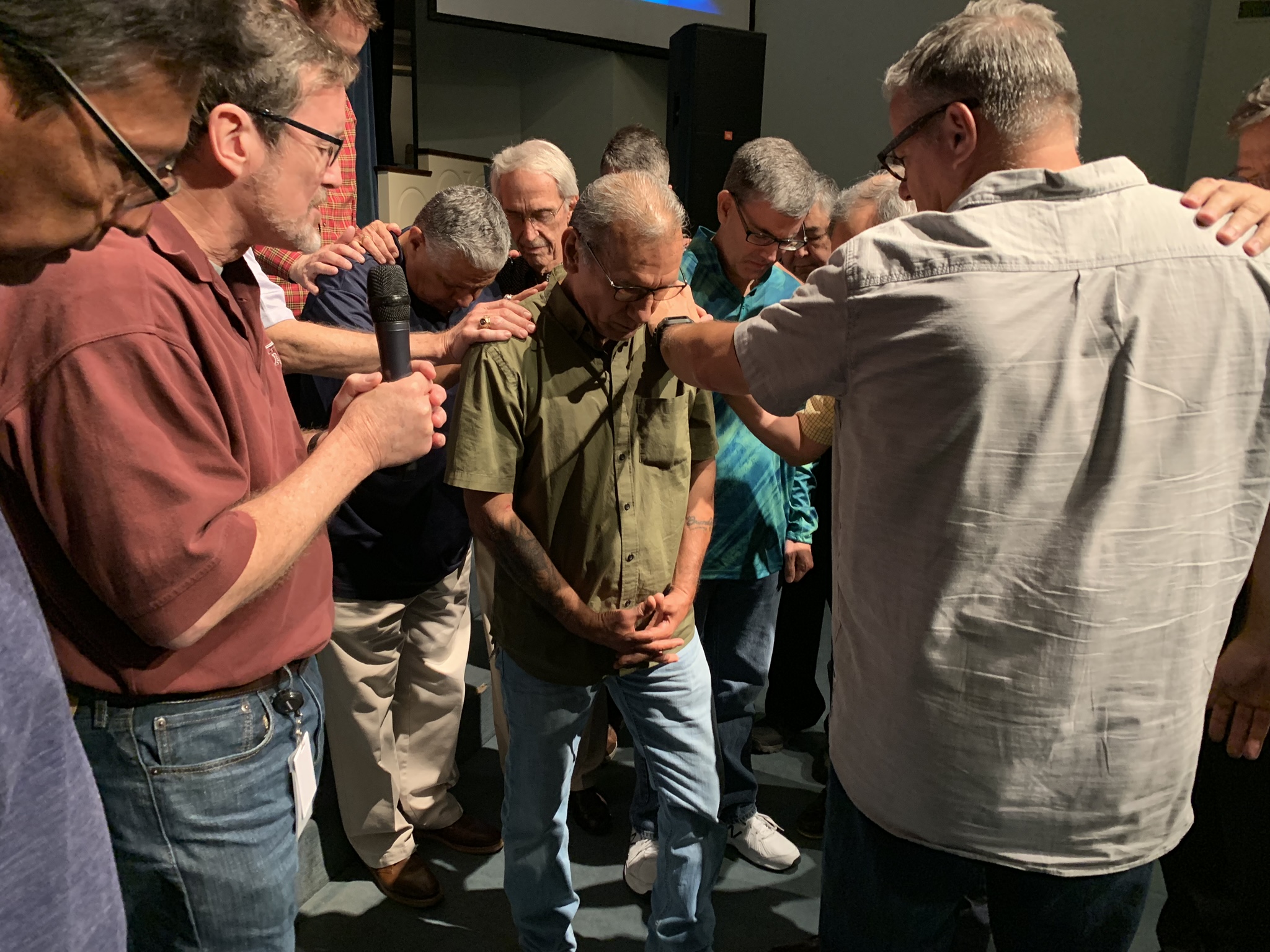
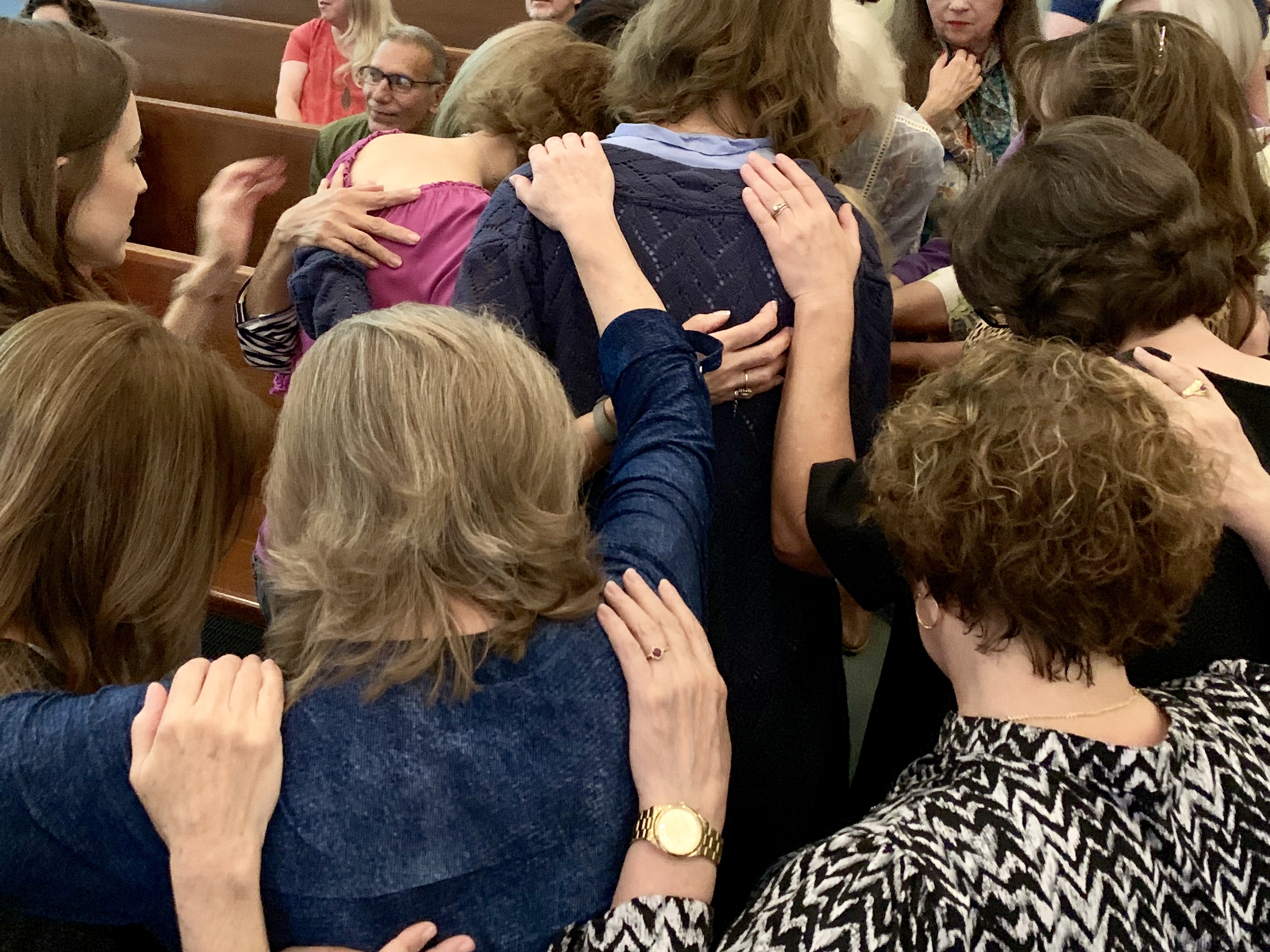
One night, at one of our church-wide prayer meetings, rather than build a list, I challenged people to share with the congregation whatever they wanted prayer for if it directly related to their lives. It was astounding how transparent and vulnerable people became in that setting. In every conceivable family, the financial, physical, spiritual, and emotional struggle was shared. This approach became the norm for our prayer meetings. People began sharing gut-wrenching stories and personal pain most of us could relate to but didn’t expect to hear. I then called anyone who had ever found victory in that area to come to pray for the person standing beside me in front of the church. It was electrifying. That one gesture—opening the mic for people to personally share their needs—changed our prayer meetings. The prayer meeting came to life. 

We want everyone to be prayed over, so keeping a prayer list for ongoing needs in the church family still makes sense. But if you want to fire on your prayer meeting, open the mic for personal prayer requests and watch for spontaneous combustion. 

None of this happens overnight. It requires planning, persistence, and patience. But if your church brings your prayer meeting back to life, your prayer meeting will bring your church back to life. 

-Kie Bowman

(This article originally appeared in Baptist Press)

SIX WAYS PASTORS BECOME MEN OF PRAYER

Is every pastor a man of prayer? At first, the question sounds odd, like asking if all water is wet or if all fire is hot. The truth, however, may be surprising. Statistically speaking, almost no pastor is satisfied with his prayer life.

During a recent pastors’ conference where I led the prayer response, pastors openly repented of having “no prayer life.” One pastor called me after the conference to confess that he “never prays.” It was surely an exaggeration, but I wonder how many other pastors feel a sense of failure in prayer? Fortunately, beyond anecdotal information alone, we have supporting data. In 2022, Lifeway reported that 72% of pastors believe consistency in their personal prayer lives is their number one spiritual need.

Scripture offers us plenty of incentive to be praying leaders. Jesus, for instance, governed His ministry through prayer. There are about 20 instances in the Gospels during significant points in His ministry when Jesus prayed. If He organized His ministry around prayer, shouldn’t we? 

Having learned from the Master, Peter, and the other Apostles identified prayer as one of their top two priorities in ministry (Acts 6:4). Paul told the Colossians that he never ceased to pray for them (Col.1:9) and that he “wrestled” in prayer on their behalf (Col.4:12). He told the Romans (1:8-10), Corinthians (1 Cor. 1:4), Ephesians (1:16), Philippians (1:3-4), and Thessalonians (1 Th. 1:3-4) something similar. He counseled his younger protege Timothy to shepherd his church around prayer (1 Tim. 2:1-8). 

In the New Testament, church leaders prayed (Acts 1:14; 13:1-4). Why wouldn’t we follow their example? We certainly haven’t improved upon their results!

Prayer is central to New Testament ministry, so what immediate steps can any pastor take to become a man of prayer? 

  • Put God on Your Calendar. First, prioritize prayer like any other important appointment. And remember, if you’re too busy for prayer, you’re too busy. Setting a specific time for prayer each day is critical. Pastors live by calendars, appointments, and deadlines. Meeting with God at the same time every day builds consistency. 
  • Set a Time. Time spent in prayer matters. Even if you start with only 5 minutes a day, it may be an improvement over your current practice. Spiritual growth can’t be microwaved; it has to be marinated. Real prayer requires quality time.
  • Name the Place. Next, determine your place for prayer. You have a room for almost everything else of importance in your life. Why would a pastor not have a prayer place? Jesus said, “when you pray, go into your room and shut the door and pray to your Father who is in secret” (Mt 6:6). Plainly, a place with limited distractions is essential to praying “in secret.” Wherever your place is, it should be distraction free and always available. 
  • Habit Forming. Keep your commitment. Let’s say, for example, you commit to praying 15 minutes every morning. That’s a good start, but it’s not enough. Instead, for example, commit to praying 15 minutes every morning for 30 days. Remember, “you are what you repeatedly do.” Prayer, like every other priority in your ministry, must become a habit in order to become successful. You’re not just praying. You’re building a habit of prayer. 
  • Fuel the Fire. Every pastor knows that being a “self-starter” is essential for ministry. Maintaining your motivation is an essential key that defines the difference between finishing well or not. No one maintains his motivation levels without frequently fueling the fire. For instance, every pastor needs to read current and classic books on prayer. Read biographies of great prayer warriors. Listen to other leaders teach on prayer. Success means taking advantage of easily accessible wisdom available to fuel your fire. 
  • Team Up. Prayer dominates the book of Acts, yet it is almost impossible to find anyone praying alone. There are only a couple of examples. Instead, it appears that everything in the book of Acts happened at a prayer meeting, after a prayer meeting, or on the way to a prayer meeting. For too long in the modern age, we have made prayer only a DIY project. Of course, secret prayer is necessary, but so are dynamic prayer meetings. Frequently what we call a “prayer meeting” is, in fact, dull and lifeless and bears no resemblance to the prayer meetings in the New Testament where the earth shook when they prayed, prison cells were opened, and the Spirit spoke. Pastors must reclaim the prayer meeting as a vital force for ministry in the 21st century.

Our congregations are hungry for the awareness of God’s presence. The 2023 Asbury revival is a perfect example. Thousands of people traveled to tiny Wilmore, Kentucky, to experience the presence of God in a prayer meeting.

The pastor’s prayer life is not an additional item on his busy “to-do” list. Instead, the praying life is a complete reorientation of how we do ministry. We’ve tried it other ways. Prayer is the better way.

This article originally appeared under the same title in BaptistPress.com